borer control
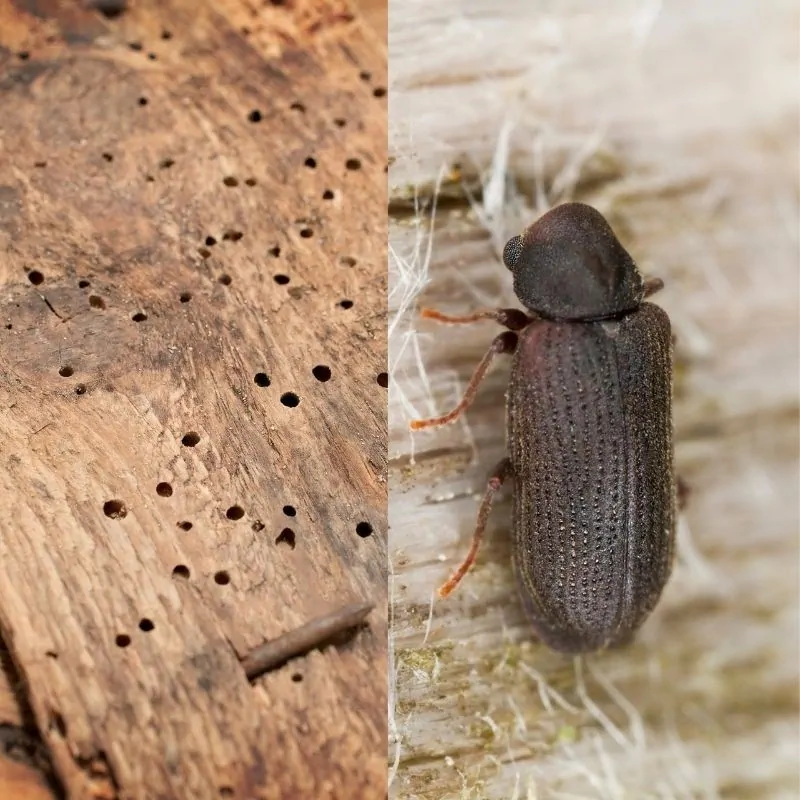
Borer is a wood boring insect whose larval stage consume untreated natural wood present in many buildings, furniture, and consumer products.
Borer become active from Spring through Summer. Adults on the wing find a mate and lay eggs in wood, either by drilling a hole or using an existing one.
Treating for Borer in the home includes the spraying of wooden surfaces with safe and effective residual insecticides, but can also include the spraying of furniture, walls, windows and doors, and other surfaces where adult Borer on the wing may set down.
how we treat for borer in the home
seasonal maintenance treatments
Most people prefer a general maintenance treatment when it comes to Borer control. We can perform a directed mist spray treatment of the interior of your home, along with a ceiling cavity and underfloor insecticide fogging to keep a lid on any Borer infestation.
Spraying of wood that is painted or varnished can only result in a surface treatment, meaning that adult borer that land on or chew through the surface will die, while larvae deep inside the wood will remain unaffected. Our surface insecticide treatments can kill Borer for up to three months or more in the right conditions. Borer will die after sufficient contact with a treated surface, or after they emerge from the treated wood. You may still experience sightings or holes as new insects emerge and succumb to the insecticides.
Borer larvae can remain inside infested wood for three to four years, so it is important to have at least three annual surface treatments in a row to break this life cycle.
Borer/Bug bombs (aerosol or smoke fumigant type) can be used however, these are normally used for knockdown of any exposed insects present at that moment. They offer little residual control and must be repeated 2-3 times per season to be effective, which makes them less economical than a directed spray treatment, and with a greater risk of off-target contamination due to the ‘fumigant’ nature of the chemical delivery system. We always recommend a directed spray treatment where possible for maximum control.
long-term structural timber treatment
Wood that is unpainted, or infested structural timbers in ceiling and underfloor cavities, or exposed wall framing etc, can be heavily sprayed with a long-term wood preservative solution. The solution penetrates the woodgrain and enters any existing borer holes, eliminating the larval and adult life stages within a nine-month period, with residual control against re-infestation lasting a decade or more.
Insulation covering structural timbers need to be removed and reinstalled by a third party, so a long-term Borer treatment is best done during renovations.
did you know...
- Borer prefer softer wood with a higher moisture content between 15%-25%, so the worst activity is generally found on the shady side of the house or under bathroom and kitchen floors.
- Wood that is badly damaged by Borer activity, such as broken floor boards, can be replaced with a modern treated timber by a building practitioner.
- Timbers cut from heart-wood, the structural core of a tree, are generally too hard for most Borer species that prefer to eat the softer outer sapwood. This is why we sometimes see one piece of wood completely chewed out, while others around it remain untouched - it all depends which part of the tree the wood was cut from.
- Treated timber production began in New Zealand as early as the 1950's, often infused with Boron salts for protection against borer and fungi. It wasn't until the 1970's that wood treatment became commonplace, so any house built before then is at higher risk of borer infestation as it may have been built without treated timber.